What if the most memorable moments of your trip to Mauritius weren’t spent on the beach, but in the misty highlands where tea leaves unfurl under cool breezes? The Mauritius tea route isn’t just a tour-it’s a sensory shift, a quiet revelation of colonial elegance and agricultural craft. Far from the coast’s rhythm, this inland trail weaves through emerald slopes and century-old estates, offering a deeper understanding of the island’s layered identity. And after tracing its aromatic footsteps, the return to modern luxury feels all the more rewarding.
A sensory journey through the heart of the highlands
The highlands of Mauritius carry a different tempo-one shaped by altitude, humidity, and history. Unlike the sun-soaked shores, this interior world breathes slowly, wrapped in morning fog and the scent of damp earth and greenery. TheMauritius tea route follows this rhythm, guiding visitors through plantations where the climate has long favored delicate crops. At nearly 600 meters above sea level, Curepipe’s plateau creates ideal conditions for tea cultivation, with consistent moisture and rich volcanic soil contributing to the nuanced flavor of local leaves.
The story begins in the 18th century, when French settlers first introduced tea to the island. Though coffee initially took root, it was tea that endured-thanks in part to the resilience of the plant and the region’s natural advantages. Over time, colonial architecture blended with agricultural ambition, giving rise to manors like Domaine des Aubineaux, where timber traders once lived before turning their attention to tea. These estates didn’t just grow crops; they shaped a cultural landscape that endures today.
The historical roots of Mauritian tea culture
Tea arrived in Mauritius not as a commercial venture, but as an experiment. The French colonial administration, intrigued by Ceylon’s success, sought to diversify the island’s agriculture. By the late 1700s, small plantings began in the central highlands. The British later expanded production, recognizing the region’s potential. This colonial legacy lives on-not just in the fields, but in the preserved manors and winding paths that make up the tea route today.
Why the humid climate of Curepipe is ideal
The plateau around Curepipe enjoys a microclimate distinct from the rest of the island. Cool breezes, frequent mist, and well-drained soil create what farmers call the “golden trifecta” for tea. These conditions slow leaf growth, allowing more complex flavors to develop. The result? A lighter, more aromatic brew than those produced in lower, hotter regions. It’s no coincidence that some of the island’s most prized harvests come from here-nature, in this case, is the most skilled artisan.
After a day exploring the plantations, retreating to a high-end villa rental in Mauritius allows you to enjoy the island's serenity in total privacy.
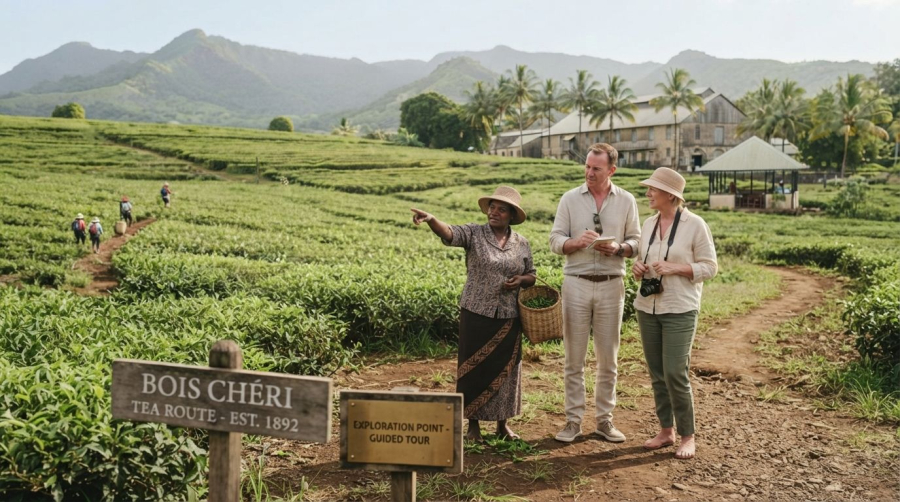
The three essential stops on the Route du Thé
To truly grasp the soul of the Mauritius tea route, three destinations stand apart-each offering a different facet of the island’s agricultural and architectural heritage. Together, they form a triangle of tradition, where history, craftsmanship, and flavor converge.
- Domaine des Aubineaux - This 19th-century colonial manor sets the tone with its Creole architecture and sprawling gardens. Originally a timber estate, it transitioned into tea production as demand grew. Today, visitors wander through preserved salons and shaded verandas, imagining life during the island’s plantation era.
- Bois Chéri - The heart of tea-making in Mauritius, this estate houses both an active factory and a museum. Here, the journey from leaf to cup unfolds in real time, with guided tours revealing the meticulous steps behind each batch.
- Le Saint Aubin - While not a tea estate, this historic sugar plantation has evolved into a cultural hub where rum and vanilla take center stage. Its inclusion in the tea route highlights the synergy between Mauritius’ key crops, offering a fuller picture of the island’s agrarian roots.
Unveiling the secrets of Bois Chéri factory
At Bois Chéri, the air carries a faint, grassy sweetness-the unmistakable scent of tea in various stages of processing. The factory, though modest in scale, operates with a precision passed down through generations. Here, the artisanal process is not hidden behind glass but lived, visible in the hands of workers who still sort leaves by sight and touch.
From leaf to cup: the artisanal process
Harvesting occurs year-round, but peaks in the early morning when leaves are at their most hydrated. Once plucked, the delicate tips are brought to the factory for withering-spread across large trays to reduce moisture. This is followed by rolling, oxidation, and drying, each step carefully monitored. No two batches are identical; subtle shifts in humidity or temperature influence the final character. The entire process, from field to packaging, can take just a few days, yet it demands constant attention.
The art of tasting overlooking the lake
One of Bois Chéri’s highlights is its tasting chalet, perched beside a tranquil lake. From this vantage point, visitors sample blends infused with local flavors-vanilla, lemongrass, even exotic fruits. The view alone is meditative, but paired with a warm cup of estate-grown tea, it becomes a moment of full sensory immersion. The light here, filtered through mist and treetops, seems to match the subtlety of the brew.
Exploring the tea museum collections
The on-site museum traces the evolution of tea production through vintage machinery and archival documents. Iron rollers from the 1800s stand beside handwritten ledgers detailing harvest yields. Photographs of early pickers-women in wide-brimmed hats, baskets slung over shoulders-anchor the experience in human history. It’s a quiet tribute to the labor behind every cup, a reminder that tradition here isn’t staged-it’s lived.
Gastronomy and local flavors along the route
The Mauritius tea route is as much about taste as it is about terrain. Each stop offers a culinary echo of the land, where ingredients are never far from their source. At Domaine des Aubineaux, lunch might be served on a veranda overlooking tea fields, with dishes seasoned with herbs grown just steps away.
Vanilla farming and sugar cane heritage
Though tea dominates the narrative, vanilla and sugar cane are quiet partners in this story. At Le Saint Aubin, visitors walk through shaded vanilla plots-delicate orchids that require hand-pollination. The process is labor-intensive, but the reward is a bean with deep, floral complexity. Nearby, old sugar mills stand as monuments to an earlier era, their rusted gears a testament to industrial ambition.
Authentic Creole lunches in historic settings
Meals along the route are anything but generic. Think fish curries simmered with turmeric and ginger, rice perfumed with pandan, and chutneys made from just-picked mangoes. These aren’t recreations-they’re daily traditions, served in spaces that have hosted generations of families. The food tells the same story as the architecture: one of fusion, resilience, and quiet pride.
Rum distillation: a parallel tradition
No visit to Le Saint Aubin is complete without a tasting of locally distilled rum. Made from fresh cane juice, the spirit is light, floral, and subtly sweet-a perfect counterpoint to the earthiness of tea. The distillery tour reveals copper stills and oak barrels, but also the philosophy behind small-batch production: patience, attention, and respect for raw materials.
Planning your excursion: practical considerations
Navigating the Mauritius tea route requires a bit of foresight. The highlands are cooler and wetter than the coast, so timing and transport matter. Mornings are ideal-both for spotting tea pickers at work and avoiding the afternoon showers that roll in with surprising regularity.
Best time of day for the plantations
Arriving by 9 a.m. gives you the best chance to witness harvesting in action. By midday, many workers have returned with their baskets, and the fields grow quiet. The mist tends to lift by late morning, offering clearer views and better photo opportunities.
Itinerary duration and transport options
Most visitors spend a full day to properly experience all three estates. While self-driving is possible, the winding roads and occasional fog make a local guide a wise choice. Private drivers often double as storytellers, enriching the journey with anecdotes you won’t find in brochures.
| Stop | Primary Interest | Estimated Visit Duration |
|---|---|---|
| Domaine des Aubineaux | Colonial Architecture & Gardens | 60-90 minutes |
| Bois Chéri | Tea Industry & Museum | 90 minutes-2 hours |
| Le Saint Aubin | Gastronomy & Distillation | 2 hours |
Combining culture and coastal luxury
One of the most satisfying rhythms of a Mauritius trip is the contrast between highland exploration and coastal ease. After a morning immersed in the cool, green quiet of the tea route, returning to the west coast feels like stepping into another world-one of golden light, turquoise water, and warm breezes.
Returning to the Black River coast
The drive from Curepipe to the coast takes about an hour, but the shift in atmosphere is immediate. Where the highlands are introspective, the coast is expansive. This is where a stay at a private villa becomes more than comfort-it becomes a natural extension of the journey. With panoramic views of the lagoon and the Morne Brabant, such accommodations offer a seamless blend of modern luxury and island serenity. It’s the perfect setting to reflect on the day’s discoveries, perhaps with a cup of locally sourced tea as the sun dips below the horizon.
Frequently asked questions
Is it possible to see the tea pickers at work throughout the year?
Tea harvesting occurs year-round, but early morning visits offer the best chance to observe pickers in the fields. Most activity happens between 7 and 10 a.m., before the mist clears and the day warms. While seasonal fluctuations exist, the consistent climate ensures regular harvests across all months.
What is the most common mistake travelers make when visiting the tea route?
Many underestimate the cooler temperatures at altitude and arrive unprepared. A light jacket is essential, even if the coast is sunny. Others try to rush through all three stops in a few hours, missing the quiet details that make the experience special. Slowing down allows for deeper appreciation.
How long should I wait before booking a guided tour of the factory?
For private or small-group tours, booking a few days in advance is usually sufficient. During peak seasons, however, availability can be limited. It’s wise to confirm visits at least a week ahead, especially if you’re coordinating transportation and other excursions.
