Summarize the topic quickly
t’s not just about finding a luxury villa with a view-it’s about discovering a place where the horizon feels like it belongs only to you. Saint Barthélemy isn’t large, but its presence is outsized. Tucked into the northeastern arc of the Caribbean, this island offers a rare blend of seclusion and sophistication. And while its footprint is modest, its geography shapes every aspect of life here-from real estate value to daily rhythm. Let’s map out exactly where it sits and how its size defines the experience.
Precise location in the heart of the Caribbean Sea
The Lesser Antilles and Leeward Islands setting
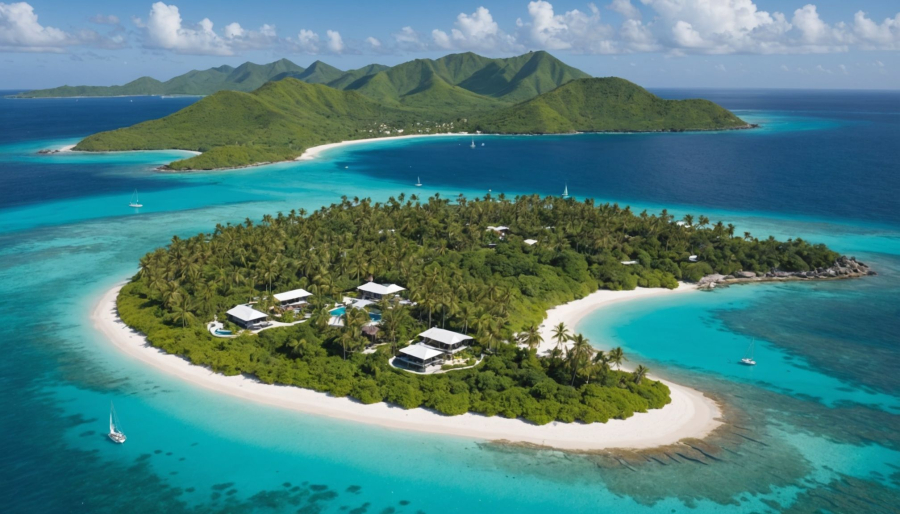
Saint Barthélemy, often referred to as St Barts, lies within the Leeward Islands chain of the Lesser Antilles. It's part of the French West Indies, a detail that shapes everything from its legal framework to its culinary flair. Just 25 kilometers northeast of St Martin and a short hop from Anguilla, it occupies a strategic yet secluded position in the northeastern Caribbean. Unlike more accessible tourist hubs, its geographical isolation is exactly what preserved the authenticity of the island of Saint Barthélemy. There are no mass-market resorts, no sprawling cruise terminals-just a carefully curated balance between elegance and nature.
Coordinates and accessibility from North America
Despite its exclusivity, St Barts remains surprisingly reachable. The island sits at approximately 17.9°N latitude and 62.8°W longitude. Travelers from North America typically fly into Princess Juliana International Airport on St Martin, then transfer via a 15- to 20-minute regional flight or a 30-minute ferry ride. Direct seasonal charters also operate from cities like Miami and New York, making the journey seamless for high-end travelers.
| Departure City | Flight Time to St Martin | Transfer to St Barts |
|---|---|---|
| Miami | 3h 15m | 20m flight or 30m ferry |
| New York (JFK) | 4h | 20m flight or 30m ferry |
| Paris (CDG) | 8h 30m | 20m flight or 30m ferry |
| London (Heathrow) | 8h | 20m flight or 30m ferry |
This layered access-international flight followed by a final leg-acts as a natural filter, preserving the island’s exclusive privacy. It’s not an accident that the ultra-discerning keep returning.
Understanding the island size and dimensions
A volcanic rock of modest proportions
St Barts covers approximately 25 square kilometers (9.7 square miles), making it one of the smallest inhabited islands in the French West Indies. To put that in perspective, it’s less than half the size of Manhattan. Yet, its mountainous terrain-formed by ancient volcanic activity-creates a sense of depth and dimension that belies its surface area. The elevation changes rapidly from sea level to over 286 meters at Morne du Vitet, the island’s highest point. This topography fragments sightlines and sound, enhancing the feeling of solitude even in relatively close proximity to neighbors.
From Gustavia to the wilder eastern tips
The island stretches roughly 11 miles long and 2.5 miles wide, oriented east-west. Driving from Gustavia, the capital, to the secluded bay of Toiny in the southeast takes less than 20 minutes. But those minutes traverse winding roads that climb and descend through lush valleys and coastal ridges. The compact scale means no destination feels distant, yet each neighborhood maintains its own identity.
Coastal perimeter and hidden coves
Despite its small landmass, St Barts boasts over 22 officially recognized beaches, each with distinct character-some lapped by calm turquoise waters, others facing Atlantic swells. The coastline is deeply indented, creating natural coves and peninsulas that break up development and maximize ocean views. This intricate shoreline is a key reason why luxury villas, even those just a few hundred meters apart, can offer entirely different experiences-one facing west for sunset views, another oriented east for morning light and privacy.
- Land area: ~25 km² (9.7 sq mi)
- Maximum width: ~4 km (2.5 mi)
- Coastline length: ~35 km (22 mi) with numerous micro-bays
- Number of beaches: 22+ with varying exposure and sand composition
- Highest elevation: 286 m (Morne du Vitet)
Geography of St Barts: A rugged volcanic landscape
The island’s dramatic silhouette-jagged hills rolling down to the sea-is the legacy of its volcanic origins. These steep mornes (hills) are covered in dry tropical vegetation, with rocky outcrops that glow amber and rose in the late afternoon light. Because there are no permanent rivers or natural freshwater sources, traditional homes were designed with large rainwater cisterns, a feature still common in modern luxury builds. Architects today work with the terrain rather than against it, often perching villas on ridgelines to maximize airflow and views while minimizing environmental disruption.
The volcanic soil also contributes to the island’s unique aesthetic. It supports hardy, drought-resistant plants like cacti and agave, giving the interior a wild, untamed look that contrasts with the pristine beaches. This duality-raw interior, polished coast-is part of what makes St Barts so visually compelling. And from a real estate standpoint, the terrain naturally limits flat, buildable land, reinforcing scarcity.
Why scale matters for the luxury real estate market
Scarcity of land as a value driver
With only 25 square kilometers of total area and strict building codes limiting height, density, and coastal impact, available plots for development are extremely limited. This scarcity isn’t just a constraint-it’s a cornerstone of value. Every new villa or estate competes for space on a finite canvas. As a result, properties with commanding views, direct beach access, or elevated positions command premium pricing. The island’s size creates a natural ceiling on supply, making real estate here a long-term store of value.
Neighborhood micro-climates and atmospheres
Because the island is so compact, subtle shifts in elevation and exposure create distinct micro-environments. The western, leeward side-home to Gustavia and St Jean-is generally calmer, sunnier, and more sheltered from trade winds. The eastern, windward coast, including areas like Toiny and Colombier, tends to be breezier and greener. This means you can own a villa that’s just 10 minutes away from the heart of town but feels worlds apart in atmosphere. That kind of versatility-urban proximity with rural serenity-is rare in luxury markets.
The island’s size also ensures that exclusivity isn’t just about price. It’s built into the geography. You won’t find sprawling developments or high-rises. What you will find are discreet compounds, private roads, and homes designed to blend into the landscape. It’s luxury that doesn’t shout-it whispers.
Environmental preservation and natural landmarks
Marine reserves and protected coastal zones
Given its small size, environmental stewardship is both practical and symbolic. St Barts has established several marine protected areas, particularly around sensitive reef systems and seagrass beds. The shallow reefs that encircle much of the island are vital for marine biodiversity and coastal protection. Because the island is small, changes in water quality or erosion patterns are more immediately visible, fostering a strong community commitment to sustainability.
Luxury developments are required to adhere to strict environmental guidelines, including setbacks from the shoreline, limits on light pollution, and restrictions on tree removal. This isn’t just regulation-it’s a cultural norm. Buyers aren’t just purchasing property; they’re becoming stewards of a fragile, finite ecosystem. The geographical scarcity of St Barts means that every decision has ripple effects, and that awareness shapes how people build, live, and invest.
Navigating the island during your stay
Transport options on small winding roads
There’s no public transportation on St Barts, and that’s by design. The island’s narrow, winding roads-many unpaved-are best navigated in a compact vehicle. Mini Mokes, small SUVs, or convertibles are the preferred choice, offering agility and open-air freedom. Rentals are easy to arrange, but availability can be tight during peak season, so planning ahead is key. The roads follow the contours of the hills, offering panoramic views but requiring careful driving, especially at night.
Walking distances in Gustavia and St Jean
While most of the island requires a car, the center of Gustavia and parts of St Jean are walkable. You can stroll from boutique shops to waterfront restaurants along the harbor, or walk the short stretch from Shell Beach to the marina. But once you venture beyond these hubs, a vehicle becomes essential-especially if you’re staying in one of the hillside villas with panoramic views. The trade-off is worth it: the roads may be narrow, but they lead to places where the only sound is the wind and the sea.
- Recommended vehicles: Mini Mokes, small SUVs, convertibles
- Driving time around the island: ~45 minutes without stops
- Speed limits: Generally 50 km/h (31 mph), lower in towns
- Parking in Gustavia: Limited; private garages are a premium feature
Common client questions
Is there a neighboring island for a day trip alternative?
Yes, St Martin and Anguilla are both easily accessible by ferry or private boat. St Martin is just 30 minutes away by sea and offers a contrast with its vibrant nightlife, duty-free shopping, and diverse dining scene. Anguilla, known for its long, flat beaches and upscale resorts, is about 25 minutes by boat, making it ideal for a lunch or snorkeling excursion.
Has the island's usable size changed with recent climate trends?
Coastal management practices have strengthened in response to rising sea levels and storm intensity. While the island’s footprint remains stable, new construction must meet higher elevation and reinforcement standards. These measures protect existing properties and ensure long-term resilience without expanding the buildable area.
How long does it take to circle the whole island for a first-timer?
Driving non-stop, you can complete a loop around St Barts in about 45 minutes. But that doesn’t account for stops-every bay, viewpoint, or hidden trail invites a pause. First-time visitors often spend a full day exploring at a relaxed pace, which is the only way to truly absorb the island’s rhythm.
What happens regarding parking after purchasing a villa in Gustavia?
Street parking in Gustavia is limited and competitive. Most luxury villas come with private driveways or garages, a significant value-add. When parking isn’t included, buyers often secure off-site spots or rely on valet services during events. It’s a small detail that carries real weight in daily life.
